

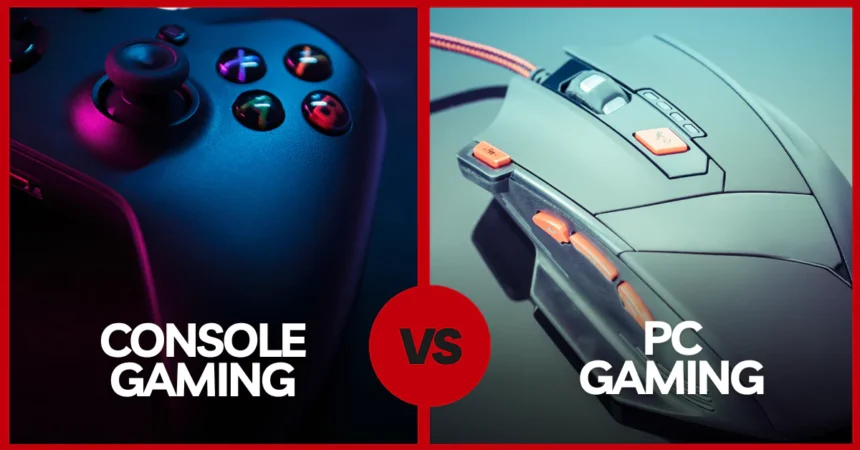
Gaming has evolved significantly over the years, offering players multiple platforms to enjoy their favorite titles. The two most popular options are console gaming and PC gaming, each with its own strengths and weaknesses. Whether you’re a casual player or a competitive gamer, choosing between a console and a PC can be challenging. This article will compare the two in terms of performance, cost, exclusives, customization, and more to help you decide which suits your needs.
A. Performance and Graphics
1. PC Gaming: Superior Power and Flexibility
PCs are known for their high-end performance and customizable hardware. Gamers can upgrade components like the GPU, CPU, and RAM to achieve better graphics and smoother gameplay.
-
Higher Frame Rates: PCs can run games at 120 FPS or more, especially with high-refresh-rate monitors.
-
Better Resolution: Supports 4K, 8K, and ultra-wide displays with advanced settings like ray tracing.
-
Mod Support: Many PC games allow mods, enhancing gameplay with user-created content.
2. Console Gaming: Optimized for Consistency
Consoles like the PlayStation 5 and Xbox Series X offer stable performance without needing upgrades.
-
Optimized Hardware: Games are designed specifically for console specs, ensuring smooth performance.
-
Ease of Use: No need for tweaking settings—just insert the disc or download the game.
-
Limited Upgrades: Unlike PCs, consoles have fixed hardware, meaning performance won’t improve over time.
Winner: PC gaming for raw power, consoles for plug-and-play convenience.
B. Cost Comparison
1. PC Gaming: Higher Initial Investment
Building or buying a gaming PC can be expensive, but costs vary based on performance needs.
-
Entry-Level PC: $600–$1,000 (1080p gaming).
-
High-End PC: $1,500–$3,000+ (4K, VR, max settings).
-
Additional Costs: Monitor, keyboard, mouse, and upgrades over time.
2. Console Gaming: Affordable Entry Point
Consoles are cheaper upfront but may have hidden costs.
-
Console Price: $300–$500 (PlayStation 5, Xbox Series X).
-
Online Subscriptions: Required for multiplayer (e.g., PS Plus, Xbox Live Gold at $60/year).
-
Game Prices: Console games often stay expensive longer than PC versions.
Winner: Consoles for budget-friendly gaming, PCs for long-term value.
C. Game Library and Exclusives
1. PC Gaming: Vast Game Selection
PCs have access to:
-
Steam, Epic Games, GOG, and more.
-
Backward Compatibility: Play decades-old games with ease.
-
Indie Games: Many indie titles launch first (or exclusively) on PC.
2. Console Gaming: Must-Play Exclusives
Consoles offer blockbuster exclusives like:
-
PlayStation: God of War, The Last of Us, Spider-Man.
-
Xbox: Halo, Forza, Gears of War.
-
Nintendo Switch: Zelda, Mario, Pokémon.
Winner: PC for variety, consoles for exclusive titles.
D. Customization and Upgrades
1. PC Gaming: Endless Customization
-
Upgrade GPU, CPU, storage, and cooling.
-
Adjust graphics settings for optimal performance.
-
Use mechanical keyboards, gaming mice, and VR headsets.
2. Console Gaming: Limited Upgrades
-
Some consoles offer storage expansions (e.g., PS5 SSD).
-
No GPU/CPU upgrades—wait for next-gen models.
Winner: PC for flexibility, consoles for simplicity.
E. Online Gaming and Community
1. PC Gaming: Free Online Play
-
No subscription needed for most games.
-
Larger modding and competitive scenes (e.g., CS:GO, LoL, Dota 2).
2. Console Gaming: Subscription Required
-
PS Plus / Xbox Live Gold needed for multiplayer.
-
More casual player base in many games.
Winner: PC for free online play, consoles for streamlined multiplayer.

F. Portability and Convenience
1. PC Gaming: Stationary but Versatile
-
Requires a desk setup (not ideal for couch gaming).
-
Gaming laptops offer portability but at a higher cost.
2. Console Gaming: Plug and Play
-
Easy to connect to a TV and play from the couch.
-
Nintendo Switch offers hybrid portable/console gaming.
Winner: Consoles for convenience, PC for versatility.
G. Longevity and Future-Proofing
1. PC Gaming: Always Evolving
-
Upgrade parts to stay current.
-
Older games remain playable via backward compatibility.
2. Console Gaming: Limited by Generations
-
New consoles release every 6–8 years.
-
Older games may not be playable on newer systems.
Winner: PC for longevity, consoles for hassle-free gaming.
Conclusion: Which Should You Choose?
-
Choose a PC if: You want high performance, customization, and a vast game library.
-
Choose a Console if: You prefer affordability, exclusives, and simplicity.
Both platforms have their merits, so the best choice depends on your budget, gaming preferences, and technical comfort level.