
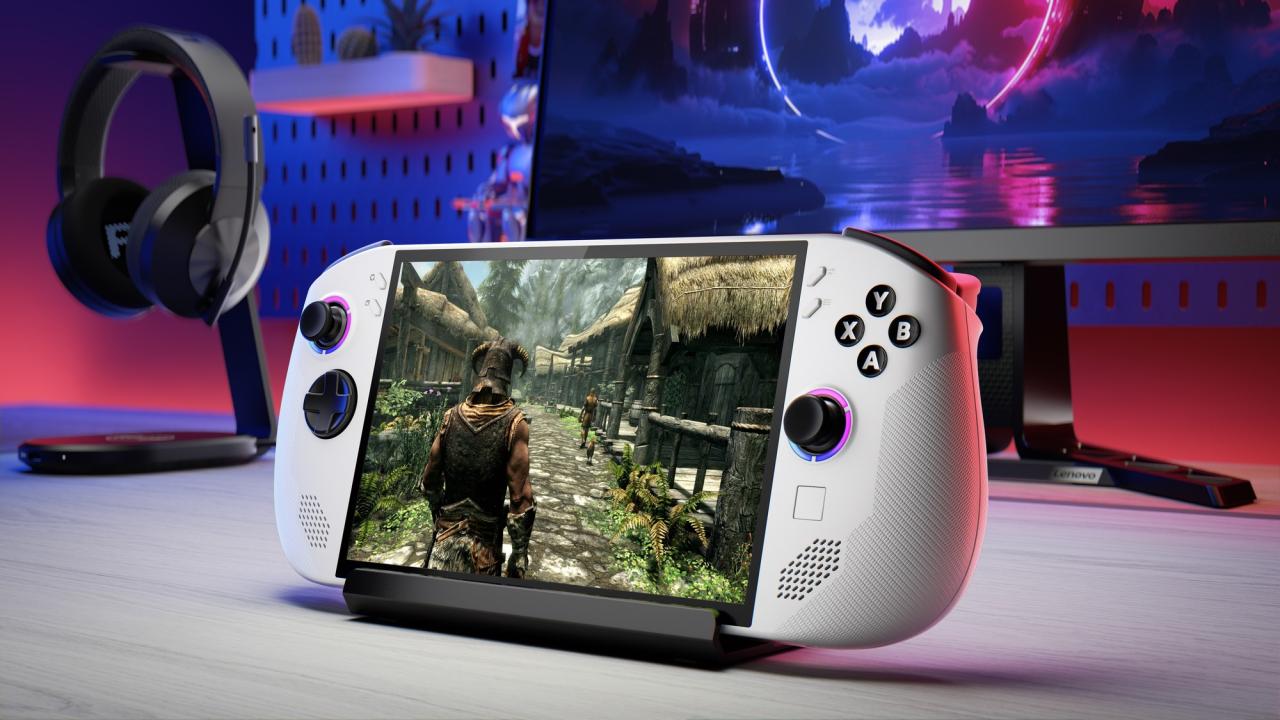
The mobile gaming industry has undergone a transformative evolution, establishing itself as the dominant force in the global entertainment sector. This comprehensive analysis explores the rapid expansion of mobile game platforms, examining the market dynamics, technological innovations, and strategic shifts that have propelled this industry to unprecedented heights. With the market valued at over $161 billion in 2025 and projected to reach nearly $350 billion by 2035, the mobile gaming ecosystem represents one of the most dynamic and lucrative sectors in the digital economy . The growth trajectory reflects a fundamental change in how people engage with interactive entertainment, transcending traditional boundaries of age, geography, and socioeconomic status.
The Current State of Mobile Gaming
Market Valuation and Growth Projections
The mobile gaming industry has demonstrated remarkable resilience and growth, even as other sectors have faced economic headwinds. In 2025, the market achieved a valuation of $161.4 billion, growing at a compound annual growth rate of 8.4% . This momentum shows no signs of deceleration, with projections indicating the market will expand to $349.9 billion by 2035. The growth is fueled by several interconnected factors, including the increasing accessibility of affordable internet, the proliferation of Android devices across emerging markets, and continuous advancements in smartphone capabilities that enable increasingly sophisticated gaming experiences.
The United States leads in revenue generation, contributing significantly to the global total. However, the Asia-Pacific region demonstrates the most rapid growth, driven by massive mobile-first populations in countries like China, India, and Southeast Asian nations. In 2026 alone, the market is projected to reach $169 billion, reflecting the industry’s ability to maintain its growth trajectory despite maturing in certain regions .
Platform Dynamics: iOS vs. Android
The mobile gaming ecosystem operates on two primary platforms, each with distinct characteristics that shape developer strategies and revenue models. Apple’s App Store accounts for 63.4% of combined revenue while representing only 30.3% of total downloads, highlighting the higher spending capacity of iOS users . Conversely, Google Play drives 69.7% of installs but generates just 36.6% of revenue, operating primarily on an ad-driven model through in-app advertising (IAA).
This fundamental difference has created two distinct business approaches within the industry. Developers often use Google Play to stress-test their servers and validate game mechanics with a real audience, while leveraging the App Store to build sustainable business models based on subscriptions and in-app purchases. The platforms also differ in retention metrics, with the App Store achieving day-1 retention rates of approximately 28–35% compared to Google Play’s 25–32% . Both platforms remain essential, serving different strategic purposes in a comprehensive mobile gaming portfolio.
Key Technological Drivers of Platform Expansion
Advanced Backend and LiveOps Integration
The rapid expansion of mobile gaming platforms has been significantly accelerated by technological advancements in backend services and live operations. Major players like Skillz have acquired platforms such as Beamable to enhance their developer ecosystems, integrating modern backend services, microservices architecture, and LiveOps tooling into their infrastructure . This integration allows developers to build, operate, and monetize games more effectively while reducing technical complexity and accelerating time-to-market.
The acquisition represents a strategic move to create unified offerings that help teams focus on creativity rather than infrastructure. By combining powerful backend, meta-game systems, LiveOps capabilities, and AI-driven tooling, platforms can offer developers more flexibility and control over their games while leveraging trusted competition, payment, and integrity systems that make these platforms unique .
Cloud Gaming and 5G Integration
The convergence of cloud gaming technology and 5G networks has opened new frontiers for mobile gaming platforms. Cloud gaming enables players to access high-quality, graphics-intensive games on mobile devices without requiring expensive hardware, effectively democratizing access to premium gaming experiences. The deployment of 5G networks has addressed latency concerns, making real-time multiplayer experiences viable on mobile devices and enabling seamless gameplay previously limited to console and PC environments.
Augmented Reality and Virtual Reality Integration
Augmented and virtual reality technologies are increasingly finding their way into mobile gaming, creating immersive experiences that blend digital content with the physical world. These technologies have evolved from novelty features to core gameplay mechanics, enhancing engagement and creating new monetization opportunities. As hardware capabilities improve and development tools become more accessible, AR and VR integration has emerged as a significant trend driving platform expansion.
Blockchain and Play-to-Earn Models
Blockchain technology has introduced new paradigms in mobile gaming through play-to-earn models and true digital asset ownership. These innovations allow players to earn cryptocurrencies or NFTs through gameplay, creating economic incentives that extend beyond traditional entertainment value. While still evolving, blockchain integration has attracted significant investment and developer interest, particularly in markets where alternative income sources are valued.
Shifting Monetization Strategies

The Rise of In-App Advertising
Recent data indicates a significant shift in monetization strategies across the mobile gaming industry. In the first half of 2026, global mobile gaming in-app purchase revenue dropped by 2% to $40 billion, while digital gaming ad spend surged by 8% to $7 billion . This trend reflects publishers’ adaptation to changing player spending behaviors and increasing competition for user attention.
The shift toward advertising-based monetization has been particularly pronounced in casual and puzzle games, which lead global ad spending at 33%, dominating Western markets . Strategy games lead ad spend in Eastern markets like Japan, Korea, Taiwan, and Singapore, demonstrating regional variations in monetization approaches. YouTube has emerged as the fastest-growing platform for mobile gaming advertising, offering publishers new channels to reach committed players.
Hybrid Monetization Models
Successful mobile games increasingly employ hybrid monetization models that combine multiple revenue streams. Developers are balancing in-app purchases, subscriptions, and advertising to maximize revenue while maintaining player satisfaction. This approach allows games to capture value from different player segments, including high-spending “whales” and players who prefer ad-supported free experiences.
Webstores and Alternative Billing
Regulatory pressure and legal action from companies like Epic Games have opened the door to web stores, third-party marketplaces, and alternative billing, reducing the dominance of traditional app store transaction models . The EU’s regulatory framework has been particularly influential, with the Digital Markets Act enabling alternative distribution channels. Partnerships like Xsolla and Skich are simplifying compliance for developers distributing games through alternative storefronts, providing payment processing, tax management, refunds, and regulatory compliance services .
Distribution Channel Revolution
Third-Party Marketplaces
The distribution landscape for mobile games is undergoing significant transformation as third-party marketplaces gain traction. Epic Games Store’s planned expansion to mobile self-publishing for iOS and Android in August 2026 represents a watershed moment for the industry . This move, following Epic’s legal battles with Google, is expected to reduce fees and support third-party app stores, increasing competition and expanding developer choice.
Android reforms are particularly significant, as they are expected to lower barriers for alternative stores, while iOS faces continued fees and policy friction that may slow adoption. The introduction of cross-platform social frameworks connecting PC, Android, and iOS adds profiles, messaging, and avatars, creating a unified gaming ecosystem across devices.
Direct Distribution
Direct distribution through developer websites and proprietary platforms offers greater control over player relationships and monetization. Studios are building their own distribution channels to reduce reliance on app store gatekeepers, maintain higher revenue shares, and collect valuable first-party data. This approach, while requiring more investment in marketing and infrastructure, provides strategic advantages in an increasingly competitive market.
Genre Performance and Player Engagement
Top-Grossing Genres
Strategy games have emerged as the top earners in mobile gaming, generating $9.3 billion in revenue, while the Puzzle genre has grown rapidly to $8.1 billion, closing the gap significantly . The divide between download volume and revenue generation is stark: Action and Strategy games accounted for 49% of all revenue despite making up just 17% of downloads, whereas Lifestyle and Puzzle games drove 74% of installs and 53% of playtime for only 34% of player spend.
Case Studies in Genre Innovation
A. Block Blast! This puzzle game topped download charts on both stores, demonstrating that zero in-app purchases can succeed in a market saturated with aggressive paywalls. The game’s pure gameplay loop, 100% ad monetization, and offline support created a compelling value proposition that retained players without requiring spending incentives .
B. Last War: Survival This title employed a genre bait-and-switch strategy, using casual arcade hooks to acquire players cheaply before gradually transitioning them into a deep 4X strategy game with high lifetime value. The game consistently held a top-3 revenue position on the App Store throughout 2025, proving that mixing genres can be successful if the funnel is intentionally designed .
C. Pokémon TCG Pocket This game demonstrated the power of sensory experience, spending budget on sound design, haptic feedback, and visual presentation to capture collectors rather than traditional gamers. The result was a consistent top-5 revenue position in key markets including Japan and France, demonstrating that sound design and haptics are retention tools rather than final polish .
The App Store Optimization Imperative
Understanding ASO Fundamentals
With over one million games available in app stores globally, even exceptional titles risk being overlooked. App Store Optimization has emerged as a crucial tool for gaining visibility and driving organic downloads. ASO involves strategically optimizing games by enhancing their visibility and ranking on platforms like the Apple App Store and Google Play Store .
Success in ASO requires refining an app’s listing details, including title, description, visuals (imagery and icon), and keywords to increase visibility to prospective users. Through strategic optimization, developers can achieve higher rankings in app store search results and subsequently increase downloads.
Key ASO Factors
A. Relevance refers to aligning the app title, keywords, and primary category with user search intent, ensuring that games appear in relevant searches.
B. User Behavior encompasses download volume and the quantity and quality of ratings and reviews, which signal to app store algorithms that a game is worth promoting.
C. Keyword Research involves identifying core game terms, long-tail keywords based on user questions, competitor keywords, and offshoots of core keywords with lower competition.
D. Competitive Analysis requires studying how competitors use headlines, descriptions, images, icons, and videos to convey their game’s value proposition.
The ARM Funnel Model
The Acquisition-Retention-Monetization (ARM) Funnel model illustrates the lifecycle through which developers must progress to achieve sustainable revenue . The funnel consists of three phases: acquisition, retention, and monetization. These stages cycle as developers reinvest revenue to gain additional users. Revenue is achievable solely through a subset of users who persist in using the application, emphasizing the importance of retention strategies alongside acquisition efforts.
Challenges and Barriers to Entry
Rising Costs and Competition
The mobile gaming market has become increasingly expensive for developers following traditional approaches. Industry experts note that mobile has become “too expensive for the old playbook,” with rising user acquisition costs, consolidating ad networks, and privacy changes making targeting and paid UA less effective . The days of relying primarily on launch momentum, store featuring, and paid acquisition are fading.
Market Maturity and Saturation
The mobile gaming industry has entered a mature phase where downloads are harder to scale, and the opportunity has shifted to favor developers who prioritize retention, monetization, and innovation . In 2025, new game launches generated only around 7% of total mobile gaming revenue, with 63% going to games more than three years old that have refined progression loops, monetization, and retention strategies over time.
Navigating the Gatekeepers
Success in mobile gaming increasingly depends on navigating a complex ecosystem of app store gatekeepers, algorithm-driven discovery, and volatile ad networks . Unlike older industries like film and TV, mobile games lack stable frameworks and predictable operating models, requiring constant adaptation and innovation to maintain market position.
Future Outlook and Predictions
2026 as a Defining Year
Industry leaders believe 2026 will be a defining year for mobile games, as the sector moves beyond a multi-year correction and toward a more mature operating model. The period from 2022 to 2024 marked the industry’s first meaningful downturn after more than a decade of uninterrupted growth, forcing studios to rethink long-standing playbooks . Survival during this period favored speed and adaptability over scale.
Structural Reset and New Opportunities
Rather than retreating, the industry is experiencing a structural reset. Chinese publishers like Microfun and Century Games have raised the competitive bar in Western markets, combining operational intensity with hybrid design. Roblox has cemented its position as a core platform for younger audiences, reshaping how mobile-native players think about creation and participation. Hybrid casual has matured into a mainstream development mindset, blurring the lines between casual and midcore.
Evidence-Based Design and AI Integration
The industry is moving away from intuition-driven design toward evidence-based, principle-driven design . Teams that can articulate why a mechanic works, rather than just copying ones that work, will have a disproportionate advantage. AI-driven creative testing is merging game design and user acquisition more tightly, enabling developers to optimize their games with unprecedented precision.
The Impact of Major Console Releases
Major console releases like Grand Theft Auto VI have the potential to reshape the entire gaming landscape, including mobile. Such culturally significant titles shift player expectations across all platforms, forcing mobile publishers to reevaluate how audiences allocate time across devices and what constitutes “premium” quality .
Conclusion

The mobile gaming platform ecosystem is experiencing rapid and transformative expansion, driven by technological innovation, shifting monetization strategies, and evolving player expectations. The market’s growth to over $161 billion in 2025, with projections reaching nearly $350 billion by 2035, underscores the sector’s fundamental strength and resilience . As the industry matures, success increasingly depends on evidence-based design, sophisticated retention strategies, and the ability to navigate an increasingly complex distribution landscape.
The rise of alternative marketplaces, advances in cloud gaming and AR/VR technology, and the integration of blockchain and play-to-earn models are creating new opportunities for innovation and growth. While challenges remain, including rising costs, market saturation, and regulatory complexity, the mobile gaming industry has demonstrated remarkable adaptability. The winners of this new era will be those who prioritize player retention alongside acquisition, embrace hybrid monetization models, and build sustainable ecosystems that can weather the industry’s ongoing evolution.
With 2026 poised to define the industry’s next era, developers and platforms that can articulate why their mechanics work rather than simply copying successful formulas will be positioned for long-term success in this dynamic and rapidly expanding market.